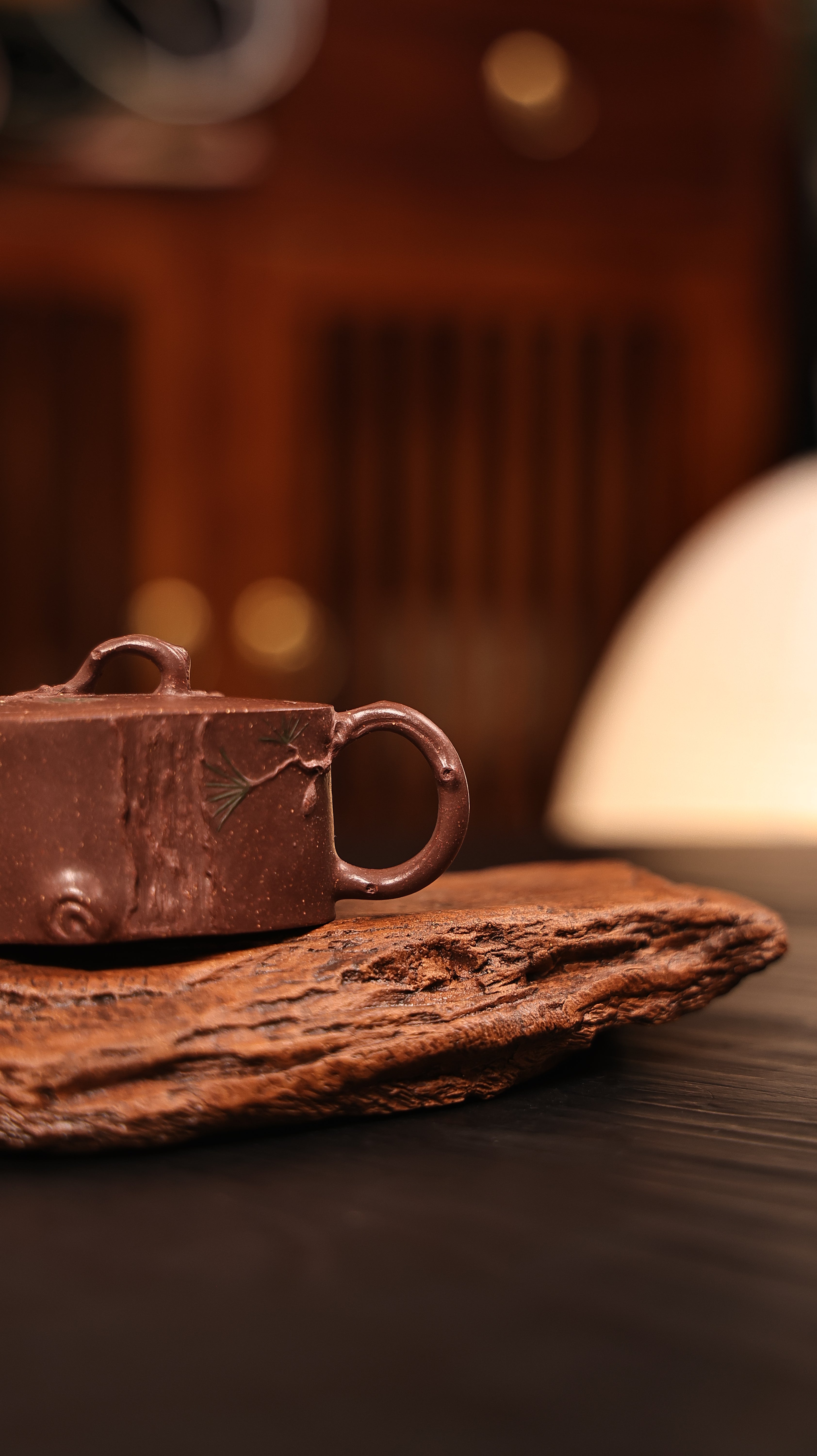
What makes a Purple Clay Teapot more desirable than glass for showcasing artisan loose-leaf teas?
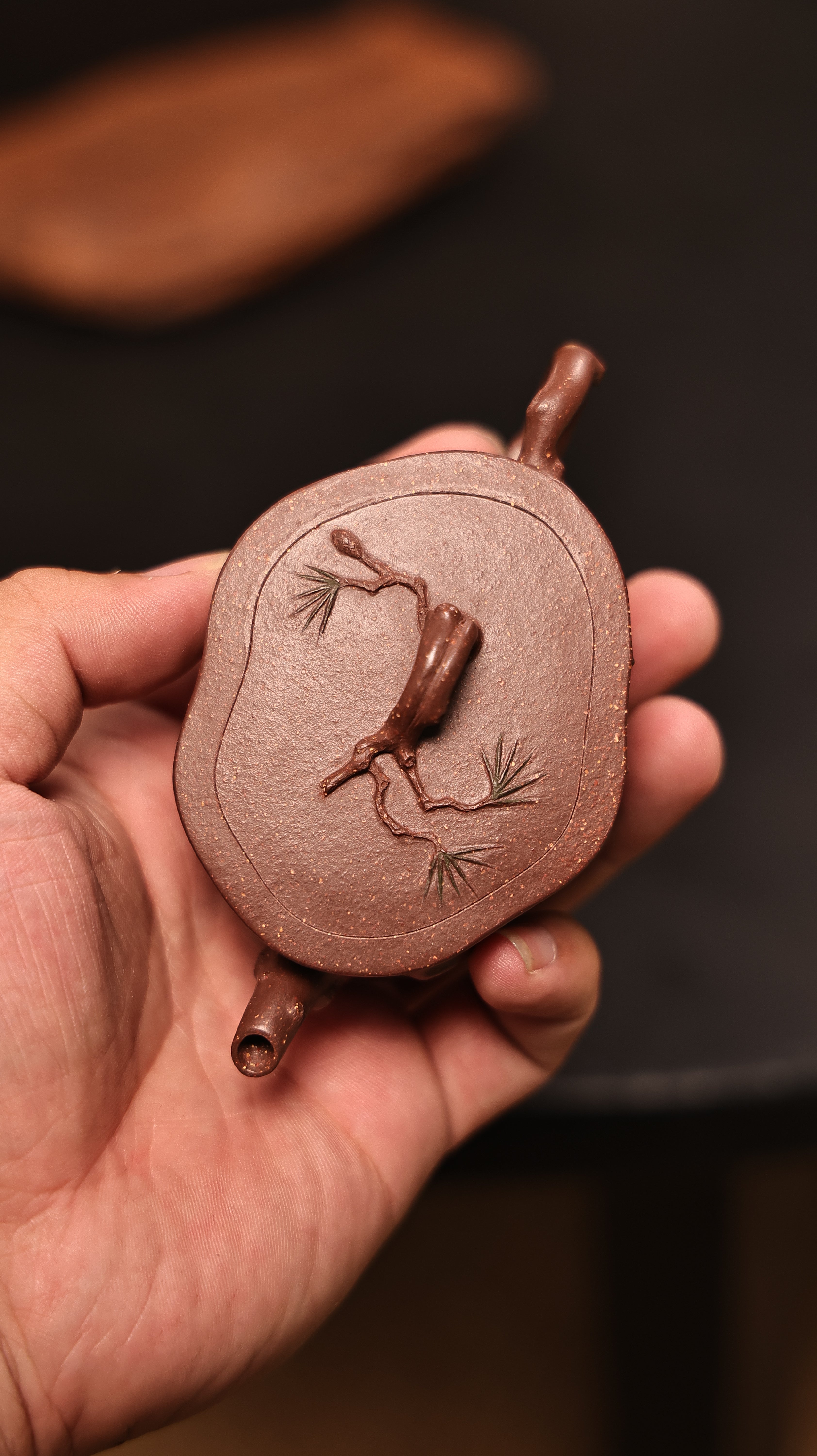
Enduring inheritance expresses Yixing clay vessels within eras,
Illustrating rare features drawn within indigenous aubergine earthen materials, those containers acquire a finish through utilization, augmenting aroma infused from steeped infusions.
Comprehending Yixing Soil: Thorough Insights into Zisha
Numerous enthusiasts acknowledge the unparalleled quality of Yixing amethyst clay, a keystone of ancient Chinese earthenware. Coming from the Yixing region of Jiangsu province, this exceptional clay boasts an fine mineral constitution, what provides outstanding qualities to the realized objects. Categories within Zisha, including Zhuni Mud, Duan Ni Mud, and Jiang Xi Mud, each has distinct pigments, grains, and curing traits, influencing the porosity and the peak note enhancement of the infusion.
Celestial Pitcher Heritage: Investigating Innovation
Far Eastern teapots embody beyond mere containers for drink; they express centuries of cultural technique. From the famous Yixing clay variations, respected for their porous nature which delivers exclusive notes to the concoction, to the elegant porcelain from Jingdezhen, each piece reveals a chronicle of dedication. The forming process is an detailed journey, often bequeathed through generations of professionals. These craftsmen use long-standing approaches such as hand-building, shaping on wheels, and ornamenting, demonstrating profound reverence for the material and the profession itself. Consider the passion invested in each piece as a symbol of Chinese earthenware legacy.
- Southern pots: a renowned choice.
- Porcelain teapots: acclaimed as their beautiful design.
- Forming techniques: a exacting yet gratifying procedure.
Clay Vessel Container Safeguarding: Maintaining Your Beloved Piece
Proper preservation of your notable Yixing Zisha vessel is fundamental to boosting its longevity. Crafted from noteworthy purple sand clay, these outstanding teapots acquire a deep patina after service, notably boosting their allure. Avoid cleaning agents; a careful rinse with lukewarm fluid is effective. Resist hot water for cleansing the teapot, as it may degrade its makeup. Allow it to air dry away from strong daylight. Consider treatment your teapot regularly using fine tea, especially full-bodied varieties. Here is a brief manual:
- Wash off with tepid aqueous solution.
- Resist agents.
- Allow it to dry fully.
- Condition with excellent tea.
Background of Yixing Teapots: Foundational Periods
The record of Yixing teapots arises fundamentally during the Qing dynasty, near the 16th age. Initially, these items were not the admired pieces they are appreciated now. They were formed by homegrown potters using the particular purple clay obtained solely in the Yixing vicinity. These early artworks were principally utilitarian, created for habitual utilization and often unpretentious in configuration. It was not until the next dynasty that they initiated to earn status beyond mere utility pottery.
Choosing the Ideal Traditional Urn: A Elementary Reference
Exploring the sphere of Yixing teapots can be overwhelming, but do not fretting! For rookies, the vital factor is understanding the earth. Real Yixing clay is prized for its absorbency, allowing the teapot to collect the tea's note over time, refining every infusing session. Consider the profile; traditional orbicular shapes prevail, yet unique preferences weigh. Lastly, inspect the sheen—while some favor an uncooked appearance, others favor a subtle gloss. Take your time in the purchase process—this is an purchase in a valued piece of production.
Fine Clay Containers and Their Influence on Chinese Concoction Heritage
Zisha teapots, produced from Yixing, China, have profoundly transformed traditional Chinese concoction culture. These Yixing clay teapots, prized for their recognizable pigment, feel, and exceptional ability to impart a subtle note to the infusion, symbolize more than mere ware; they are valued pieces of art and symbols of distinction. The very observance of preparing and serving brew using a Zisha teapot is steeped in tradition, elevating the experience beyond simple refreshment. Dynasties of artisans have honed their techniques, passed down through descendants, resulting in highly coveted pieces. Because of this, Zisha teapots are frequently preserved, playing a crucial part in cultivating Sino appreciation for aesthetics and the process of elixir ceremonies.
- Characteristic Clay Composition
- Adding Subtle Flavor
- Elegant Craftsmanship
Recognizing Legitimate Special Native Jars
Obtaining a certified Yixing teapot can be a pleasurable experience, but the field is often saturated with counterfeits. Dividing between a authentic antique and a current reproduction requires thorough inspection. Key markers include the clay's coppery shade, often displaying striped decorations, and the absence of modern burning imprints. The profile should appear natural class, reflecting the traditional Yixing look. Finally, analyzing the creator's emblem is essential to verify legitimacy against official testimonies.
- Assess the clay's grain.
- Look for irregularities, indicative of crafted quality.
- Consult an professional for assessment.
Committing to 宜兴 Pottery: A Extensive Explanation to 紫砂 Analysis
The field of Native Zisha pieces presents a distinct opening for educated admirers. Consistently, the value of these artisanal artifacts is affected by multiple considerations, such as the standard of composition, the talent of the builder, the historical significance, and, naturally, the present trade. Newcomers should prioritize on researching the diverse categories of Zisha clay—such as Glacial, Tranquil Vessel, and Scarlet Earth—and Chinese Teapot studying the traits linked to each. Diligent review of the pot's design, shade, and mark is also essential to make competent considerations when investing.